INDUSTRY:
Commercial Banking
CLIENT:
JPMorgan Chase
YEAR:
2025
EXPERIENCE:
Risk & Payments - Recipient Management
Payments Fraud & Risk
about.
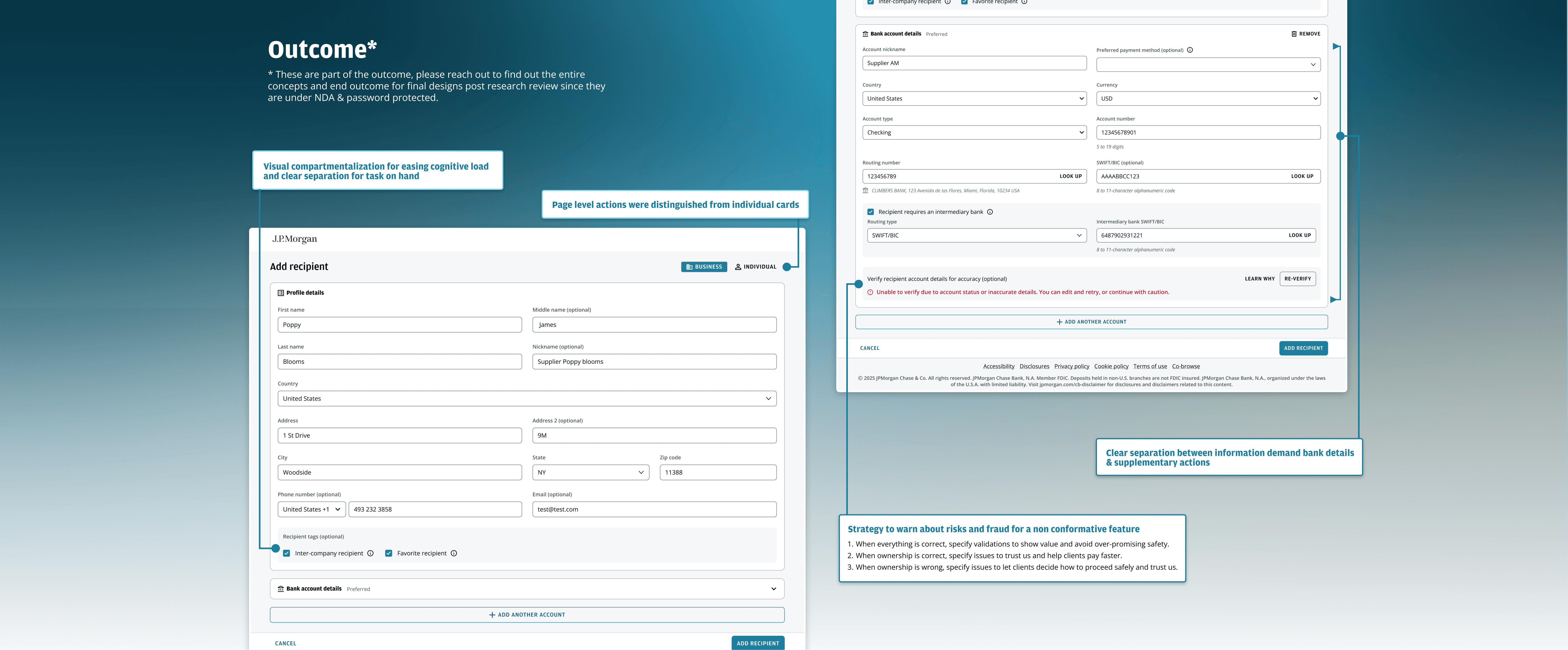
For JPMC Digital Banking, we embedded pre-send fraud protection directly into the Add/Edit Recipient flow so founders and novice operators can create safe payees without learning banking jargon. The experience layers Account Verification (AVS), bank-name lookup, and a recipient confidence model into the form itself, with plain-language guidance, inline fixes, and clear proceed/stop states. The result is a faster, safer way to add recipients that reduces misdirected payments and back-office rework.
Want to learn more about users & client market segments? Click here - Banking in Innovation Economy
Jobs To Be Done (JTBD)
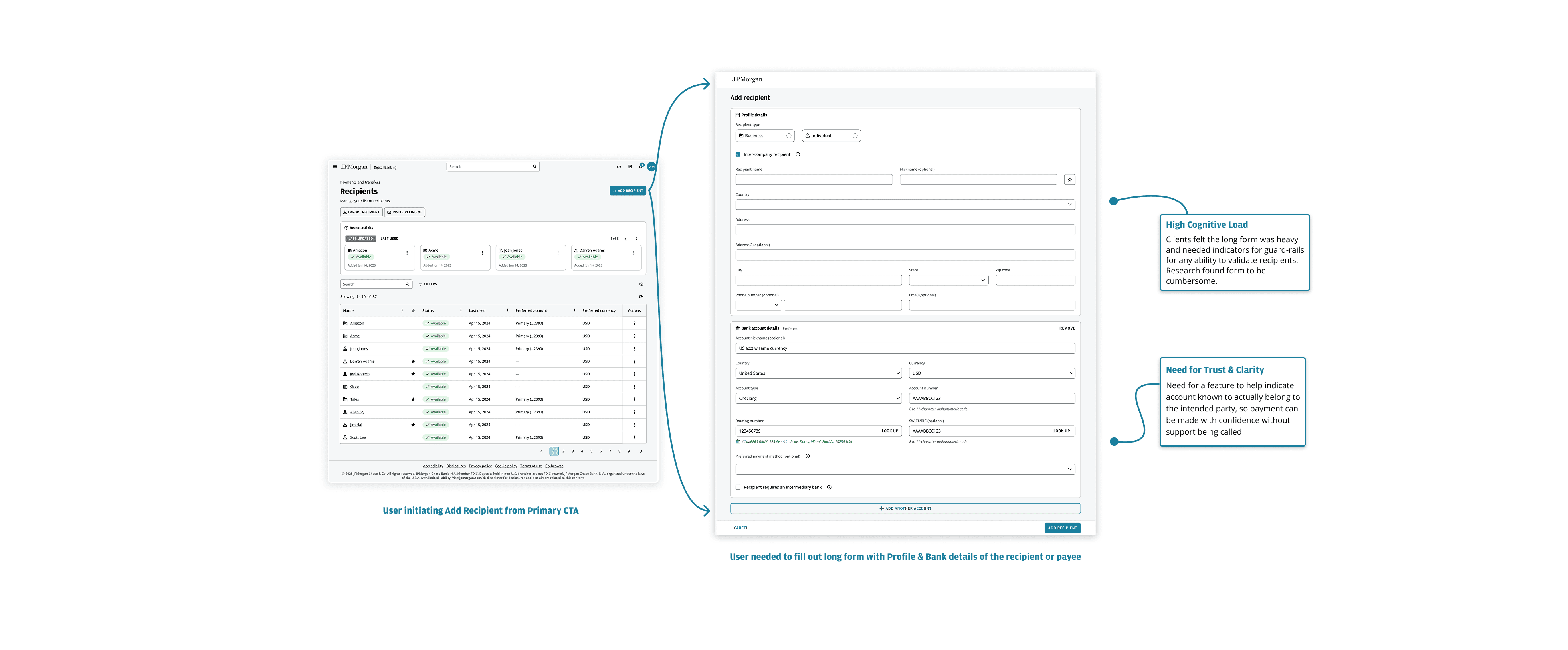
“When I add a new recipient, I want to know the account actually belongs to the intended party so I can pay with confidence without calling support.”
“If something looks risky or incomplete, show me exactly what to fix, why it matters, and let me proceed safely with clear guardrails.”
“Give me an audit-friendly trail (approvals, status, and reasons) so my team and bank stay aligned” if anything fails or is declined.
Primary User Needs
Trust & clarity: Human-readable copy (“Learn why”), concrete next steps.
Low cognitive load: Progressive disclosure; defaults tuned for novices (startup founders).
Guardrails, not roadblocks: Safe-mode options (hold & review, send with caution), verified badges.
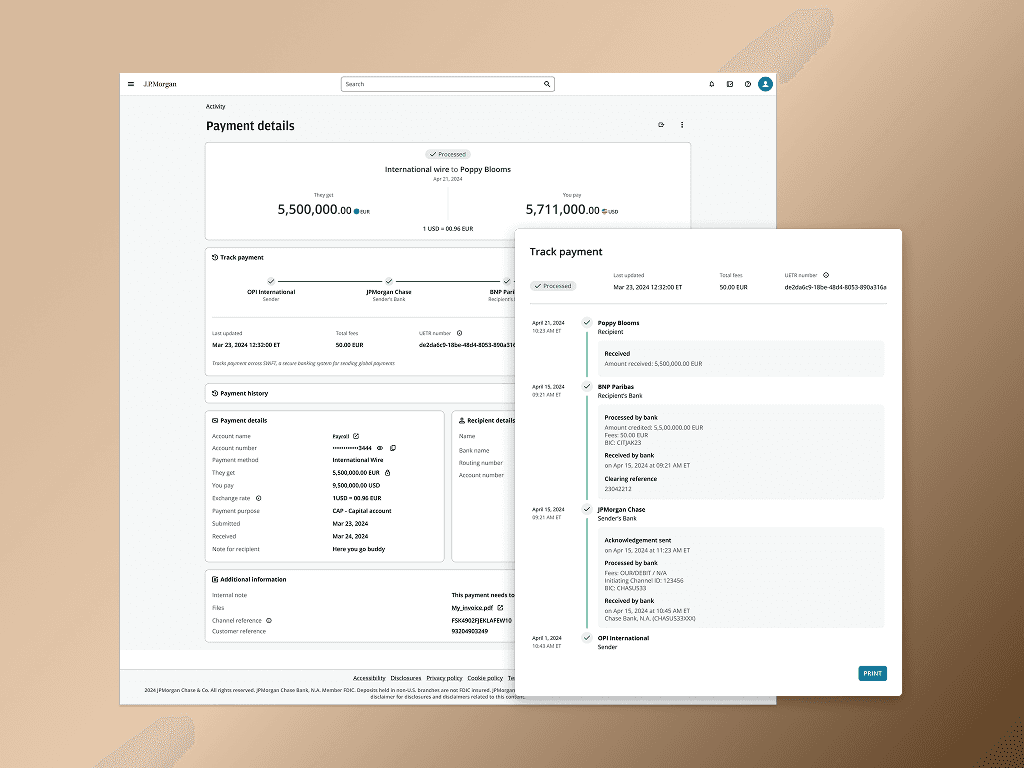
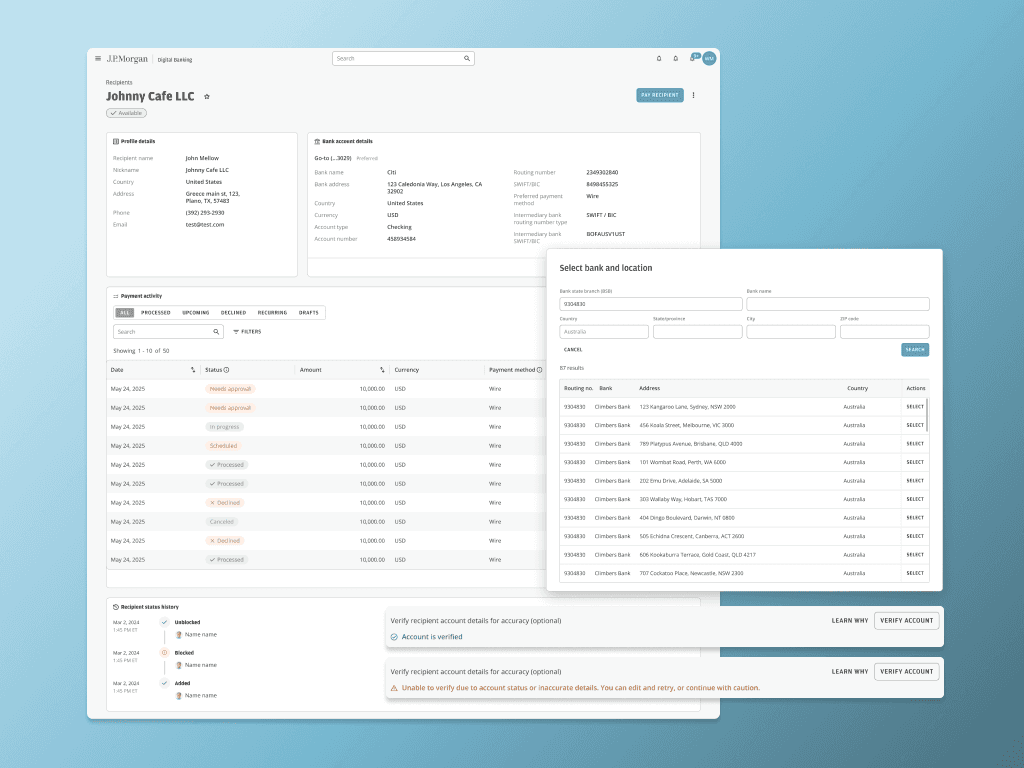
Audit-ability: Unified activity timeline (Needs approval → Scheduled → In progress → Processed / Canceled / Declined), recipient status history.
challenge.
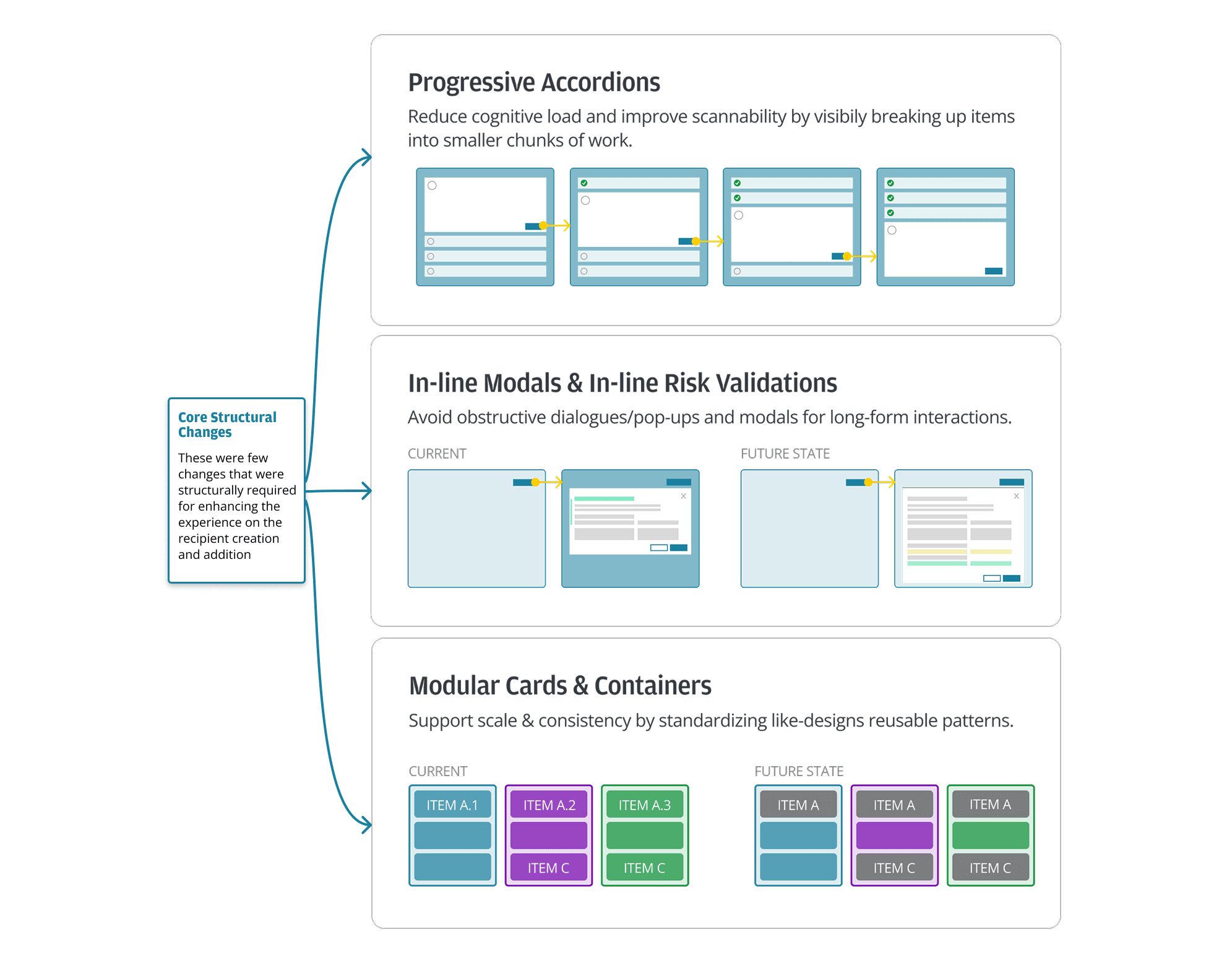
Pre-send fraud risk peaks at recipient creation (wrong account/routing, impersonation, stale details). Existing tools verified too late (at payment), used banking terms (SWIFT/BIC, intermediary), and scattered signals across dialogs and pages, raising first-time failure, support tickets, and rework.
Constraints: different rails/countries, approval matrices, rate locks, and compliance text, all while keeping the flow fast for experts and gentle for novices.
Approach
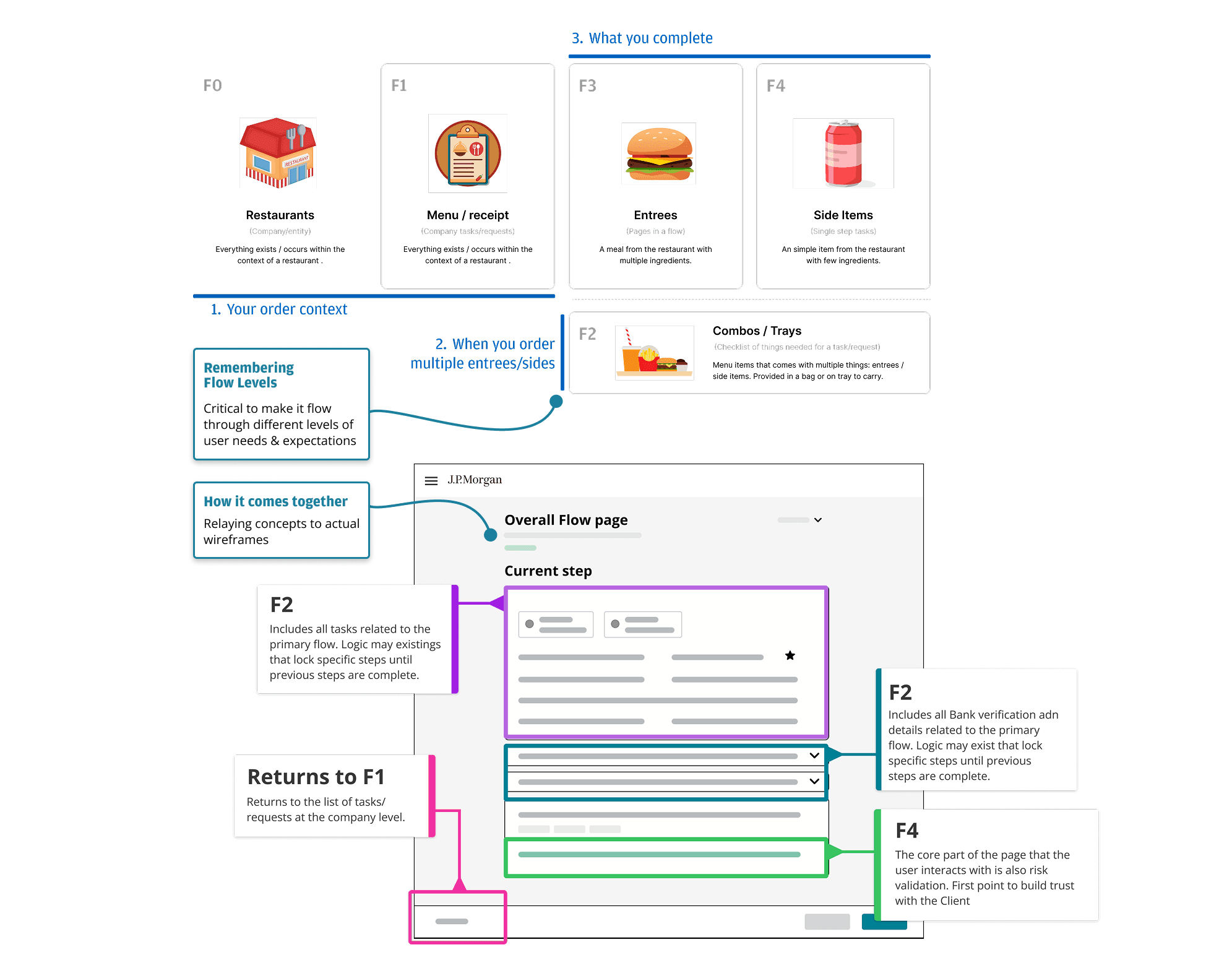
Guardrails-first form that verifies early, explains clearly, and adapts to risk.
Inline AVS + bank lookup
Auto-resolve bank name from routing; verify account + routing on blur.
Confidence chip (Verified / Partially verified / Unable to verify) with short “Learn why”.
Just-in-time education
Plain-language banners (e.g., “We couldn’t verify this account—common reasons… Fix now or proceed with caution”).
Microcopy replaces jargon; examples for field formats.
Decision'able states & safe paths
Proceed with Caution (requires note + approver), Hold for Review, or Verify & Save.
Lock critical values after approval; show “locked they get / you pay” patterns in downstream dialogs.
Unified status & history
Recipient profile shows activity across payments (Needs approval / Scheduled / Processed / Declined), with reasons and approver names.
Decline/Cancel dialogs mirror payment language, reducing mismatch.
result.
For our user and market segment of US SMB–Mid-market companies (5–500 FTE) using a banking platform for domestic & cross-border payouts. High mix of ACH/Wire, light treasury maturity, often founder-led finance. In controlled beta, the solution is already delivering the right signals: recipient setup feels clearer, back-and-forth is reduced, and the path from adding a payee to making the first payment is noticeably smoother. Support teams are seeing fewer escalations tied to invalid details, and approvers report greater confidence thanks to inline verification, plain-language guidance, and safe-mode options. Net effect: lower risk, higher trust, no extra friction.